Author: Syspro User

The SM@RTM project comes to an end

2 - October - 2025


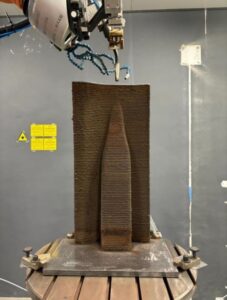
The SM@RTM project aimed to improve the competitiveness of RTM processes using predictive digital technologies, in-situ process monitoring and automated control systems, providing plant support in all phases of production using artificial vision systems with thermal cameras to monitor automated preforming processes, fibre optic-based embedded sensors in moulds for monitoring RTM process parameters, implementation of a closed-loop control system based on electro-valves, implementation of an HMI system with integration of reduced order models (ROM) for process parameter evaluation, and implementation of new resin injection moulding technologies using large-format additive manufacturing.

Following the completion of the technical work packages, the proposed developments are obtained:

 

Integration of a thermal imaging camera into a robotic arm for the manufacture of dry fibre preforms: the thermal footprint of the material (after its temperature activation process) is used to assess the possible appearance of defects in the preform and their effect on the subsequent stages of manufacture.
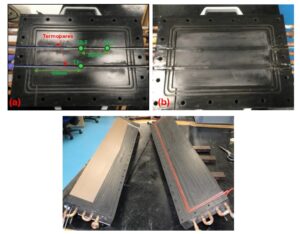
 

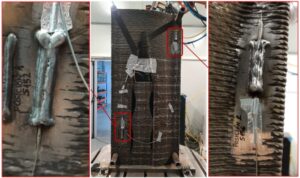
Large-format smart additive manufacturing moulds: Fibre optic-based process sensors (pressure + temperature) were developed. They are integrated both into the mould structure for monitoring process temperatures and into the surface in contact with the part to measure the injection process in the RTM stage. These moulds were developed using large-format additive manufacturing (LFAM) with high-performance plastics reinforced with short carbon fibre for high pressure loads.
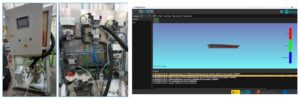
 

Closed-loop control system, integrating injection vessel and human-machine interface (HMI) with reduced-order models (ROM) for process evaluation: An industrial system was developed that integrates a pressurised resin injection vessel, an electro-actuated valve system and activation mechanisms for closed-loop control of the resin injection process, enabling flow control during the process. All the sensors and data generated in the process feed into a user interface, powered by simulation models, for process parameter evaluation and quality control in the preforming and RTM resin injection stages.

Following the latest integration tests and manufacturing at the COMPOXI facilities, the technical developments of the project have been completed, pending final evaluation and audit of the project. This last year has seen outstanding joint work by all the partners and participating entities in the completion of all the technical developments.


SM@RTM Project (PTAP-20221007) funded by:

File: PTAP-20221007
Acronym: SM@RTM
Name: INTELLIGENT, ADAPTIVE AND SUSTAINABLE TECHNOLOGIES FOR AGILE, ZERO-DEFECT MANUFACTURING OF COMPOSITE MATERIALS USING RESIN TRANSFER PROCESSES.
Project Grant Awarded (€): €1,551,133.99
Duration: 2022-2024
Description: CDTI Aeronautical Technology Programme, 2022 call for proposals.
This project is funded by the Ministry of Science and Innovation and ‘Subsidised by the CDTI’.

For more information, visit the SM@RTM project website: https://www.smartm-id.com/

BEAMSHAPE. Project Description.

The objective of BEAMSHAPE is to develop a dynamic laser beam shaping device (MPLC_Multi Plane Light Converter) that allows to carry out customized laser welding processes on metallic materials that are difficult to weld, such as copper and/or aluminum, widely used in the e-mobility sector, and especially in the manufacture of electric battery components such as bus-bars. This device stands out because it can be implemented in any fiber-guided laser source.

BEAMSHAPE includes process monitoring using real-time infrared (IR) imaging and the generation of a digital platform that provides artificial intelligence (AI)-based data analysis services to correlate process stability, defect generation and process parameters.

The BEAMSHAPE consortium covers the entire value chain through research on innovative digital and sustainable manufacturing solutions and services to be demonstrated in relevant production environments (FORMINSA).

It consists of 4 SMEs (CAILABS, NIT, SYSPRO, FORMINSA), comprising high quality technology developers and relevant “early adopters”.

BEAMSHAPE will supply 3 products and 1 service. CAILABS will market the dynamic beamforming module. NIT will offer a monitoring solution compatible with that module, available as a stand-alone solution or as an add-on to the CAILABS product. SYSPRO will provide end users with cloud-based process optimization services. FORMINSA will introduce an enhanced product for the e-mobility sector.

Acronym: BEAMSHAPE

Project: CIIP-20242011

Duration: from 10/01/2024 to 03/31/2027

Budget: 669.037€.

CDTI grant: 335.777,96€.

This project has received funding from the Eurostars-3 programme, co-financed by CDTI and the European Union’s Horizon Europe Framework Programme for Research and Innovation.

TRIHSENS. Notice 3.

11 - February - 2025

TRIHSENS Research Project Results Presented on World Water Day

  • Organized by Viaqua in the context of World Water Day and the presentation of TRIHSENS project results.
  • Over 50 private entities, public administrations, universities, and technology centers participated.
  • Mila Castro, Santiago de Compostela’s Councilor for the Environment, closed the event.

Innovation and Collaboration in Water Management

Santiago de Compostela, March 18, 2021 – Ahead of World Water Day on March 22, and marking the completion of the TRIHSENS research project, Viaqua, as the project leader, along with the consortium partners, organized an online event to present innovative water management solutions developed in Galicia—particularly those offered by TRIHSENS. The event gathered over 50 private companies, public administrations from Galicia and other regions of Spain, universities, and technology centers.

The session began with a presentation by TRIHSENS project partners—Roca Roibás, Syspro, Ayco, and Viaqua—who summarized the work carried out over the last three years. This research led to the development of a comprehensive real-time monitoring solution for drinking water, ensuring efficient management and the protection of this vital resource.

TRIHSENS is part of the CONECTAPEME 2018 program, supported by the Xunta de Galicia through the Axencia Galega de Innovación (GAIN) and the Consellería de Economía, Emprego e Industria, co-financed by the European Regional Development Fund (FEDER) under Axis 1 of the Galicia 2014-2020 Operational Program.

Cutting-Edge Water Management Projects

During the event, two Galician technology centers involved in TRIHSENS presented additional innovative water management projects:

  • Project Nayades (AIMEN) – Focused on automated and intelligent management of water resources.
  • City Sentinel (Suez España & Cetaqua) – A wastewater COVID-19 monitoring tool, developed through the REVEAL project.

Additionally, the new European Water Directive was introduced, highlighting the increasingly strict regulations and the need for innovative tools like those showcased at the event. These solutions aim to anticipate potential issues and shift toward a proactive, preventive management approach.

Public-Private Collaboration for a Sustainable Future

Marcos Martín, CEO of Viaqua, emphasized the importance of strengthening alliances and fostering collaboration between institutions, businesses, and the third sector. He reaffirmed the crucial role of public-private partnerships in achieving sustainable growth and development. He stated, “Through collaborative projects like TRIHSENS, we aim to develop technologies that address existing and future water management challenges and provide public administrations with solutions for their implementation.”

To close the session, Mila Castro, Santiago’s Councilor for the Environment, highlighted the complex processes, technologies, and workforce required to deliver high-quality tap water for human consumption. She expressed the city’s willingness to continue participating in research projects, recognizing that being a case study is a significant advantage for staying up to date with the latest technological advancements.

“We consider R&D&I support essential as a driver of economic, social, and environmental change. We would like to thank all members of this project for their hard work and commitment to improving this public service.” – Mila Castro.

TRIHSENS. Notice 2.

11 - February - 2025
  • TRIHSENS is validating its comprehensive control system to enhance response time and efficiency in the water purification process at the Tambre Water Treatment Plant (ETAP), owned by the Concello de Santiago and managed by Viaqua.

  • TRIHSENS establishes faster and more precise operational protocols for the drinking water purification system.

Automated Control System for Water Purification

Santiago de Compostela – The TRIHSENS project is validating an automated system aimed at improving water purification processes. Its goal is to develop a complete control and alarm system to optimize water treatment operations. The system—comprising a fluorescence sensor, a predictive model, and a decision-support tool—represents a strong commitment to protecting and preserving water quality.

As part of the 2020 implementation phase, a monitoring probe was installed at the Tambre Water Treatment Plant (ETAP) to continuously monitor the purification process. This probe, equipped with low-cost LED-based fluorescence sensors, has been integrated into the predictive model and the decision-support tool. The system enables rapid and precise responses to events, ensuring high-quality drinking water control.

A More Efficient and Cost-Effective Solution

The development of this fully integrated system guarantees the safe and efficient management of drinking water for the population of Santiago de Compostela. This solution proposes a more agile and economical model, aiming to replace manual sampling and external laboratory analyses, thereby reducing response time and costs.

TRIHSENS aligns with new European policies, promoting preventive and efficient water management. At the same time, it continues to support research, development, and innovation (R&D&I) projects through collaborative efforts.

Innovation and Collaboration

This project is part of the CONECTAPEME 2018 program and exemplifies innovation and cooperation among its partners: Roca Roibás, Syspro Automation, Ayco, Viaqua, AIMEN, and Cetaqua. It began in 2018 with the support of the Xunta de Galicia, through the Axencia Galega de Innovación (GAIN) and the Consellería de Economía, Emprego e Industria, co-financed by the European Regional Development Fund (FEDER) under Axis 1 of the Galicia 2014-2020 Operational Program.

TRIHSENS. Notice 1.

11 - February - 2025
  • The technological solution will be implemented at the Tambre Water Treatment Plant (ETAP), owned by the Concello de Santiago and managed by Viaqua.

  • The initiative’s partners—ROCA ROIBAS, SYSPRO, AYCO, and VIAQUA, along with the AIMEN and CETAQUA technology centers—have already begun developing this R&D initiative under the TRIHSENS project.

TRIHSENS Project – A Model of Innovation and Collaboration

Santiago de Compostela – The TRIHSENS project, part of the CONECTAPEME 2018 program, is an example of both innovation and cooperation between small and large companies, as demonstrated by the consortium members: Roca Roibás, Syspro, Ayco, Viaqua, AIMEN, and Cetaqua.

The project’s goal is to enhance current water purification systems, moving toward a more efficient management model that enables the development of a comprehensive real-time monitoring solution for drinking water quality. This initiative reflects a commitment to the protection and conservation of this natural resource.

Technological Advances and Implementation

After the project’s initial months, the effectiveness of fluorescence sensors—based on LED technology—has been confirmed. These sensors represent a significant breakthrough in the real-time monitoring of the water treatment process. The system ensures efficient management and strict control of drinking water distributed in Santiago de Compostela.

This innovative technology, soon to be installed at the Tambre Water Treatment Plant (ETAP), is powered by artificial neural networks, which act as a predictive and protective system within the water purification process.

A Step Toward Preventive and Efficient Water Management

TRIHSENS aligns with new European policies by developing technology focused on proactive and efficient water management. At the same time, it continues to promote collaboration through the support of research, development, and innovation (R&D&I) projects.

Launched in 2018, the project has received support from the Xunta de Galicia, through the Axencia Galega de Innovación (GAIN) and the Consellería de Economía, Emprego e Industria, and is co-financed by the European Regional Development Fund (FEDER).

Significant progress in the SM@RTM project to reduce defects in composite parts

11 - February - 2025


In the world of engineering, every advance represents a step forward towards excellence and efficiency. In this regard, the consortium led by CiTD has achieved significant milestones in the SM@RTM project, aimed at mitigating defects in composite parts using the resin transfer moulding (RTM) technique.

One of the project’s most notable branches, developed by CiTD in collaboration with IMDEA, focuses on optimising the RTM process through advanced computational models. Computational Fluid Dynamics (CFD) techniques have been applied to model mould filling, taking into account different mould defect scenarios, such as gaps or overlaps, inherent in manufacturing using Automated Fibre Placement (AFP). These models, supported by accurate data obtained from the collaboration between CiTD and AIMEN, also within the scope of the project, allow for a detailed simulation of the filling process, providing a deep understanding of the factors that influence the final quality of the part.

Furthermore, an innovative leap forward has been made by developing surrogate models using neural network techniques in Python. These models significantly reduce the computational time required to simulate different defect scenarios, allowing for rapid evaluation of the influence of injection parameters and mould defects on the final porosity of the part. This approach, based on data obtained from CFD models, demonstrates an effective synergy between numerical simulation and machine learning.

In the final stage of this simulation process, from complex CFD simulation models to surrogate models, including the learning of these models, CiTD has played a crucial role in the analysis and interpretation of the results obtained. Through exhaustive studies, it has been identified how different types of mould defects affect the injection pressures required during the RTM process. It has been observed that gap-type defects require lower pressures compared to overlap-type defects. Based on these findings, optimal pressures have been determined for each error distribution, thus achieving more precise and efficient control of the moulding process. In short, real-time corrective actions have been developed, a powerful tool for operators, and RTM control strategies have been established.

In summary, the advances achieved in the SM@RTM project represent a significant milestone in the pursuit of excellence in composite parts manufacturing. The combination of advanced simulation models and innovative machine learning techniques paves the way for a more efficient, reliable and adaptive RTM process.


SM@RTM Project (PTAP-20221007) funded by:

File: PTAP-20221007
Acronym: SM@RTM
Name: INTELLIGENT, ADAPTIVE AND SUSTAINABLE TECHNOLOGIES FOR AGILE, ZERO-DEFECT MANUFACTURING OF COMPOSITE MATERIALS USING RESIN TRANSFER PROCESSES.
Project Grant Awarded (€): €1,551,133.99
Duration: 2022-2024
Description: CDTI Aeronautical Technology Programme, 2022 call for proposals.
This project is funded by the Ministry of Science and Innovation and ‘Subsidised by the CDTI’.

For more information, visit the SM@RTM project website: https://www.smartm-id.com/

REPACELL. Notice 1.

11 - February - 2025

This project has been co-financed by the European Regional Development Fund (FEDER) with the aim of promoting technological development, innovation, and high-quality research.

“A way to make Europe”
SYSPRO AUTOMATION, S.L.U

At SYSPRO AUTOMATION, we have been selected by CDTI (Center for Industrial Technological Development) to receive funding for our new R&D project:
“Automated and optimized production of micro/nanoparticles of cellulose from recycled paper” (IDI 20210367).

The objective of this project is the research and development of systematized and automated processes for obtaining cellulose nanofibers from the valorization of paper and cardboard waste, to be used as a reinforcement material in enhanced recycled papers.

Nanocellulose possesses unique properties that make it highly versatile for various applications. It offers high strength, a large surface area, lightweight properties, and rigidity, while also being a sustainable resource. By utilizing raw materials such as wood, agricultural residues, fruits, or paper waste, high-value applications can be developed across different sectors.

To integrate this project effectively, we have applied our R&D efforts in several cutting-edge fields, including:

  • The production of micro/nanoparticles of cellulose
  • The automation and sensorization of processes at a pilot scale
  • The application of R&D in micro/nanoparticles of cellulose for enhanced paper production

This project has been executed in Nigrán (Pontevedra), starting in 2020 and concluding in December 2022. It was carried out with the support of a grant of up to €580,014.50, representing 85% of the total approved budget of €682,370.00.

REPACELL. Project Description.

11 - February - 2025

The REPACELL project focuses on developing fully systematized, sensorized, and automated processes for obtaining cellulose nanofibers from the valorization of paper and cardboard waste. These nanofibers can be used to enhance the production of higher-quality recycled paper. The project’s main goal is to study techniques for obtaining cellulose nanoparticles and the quality parameters that define them, enabling process automation. Additionally, it involves the production of cellulose nanoparticles with suitable properties for future applications.

The primary objective of the project is the research and development of systematized and automated processes for obtaining cellulose nanofibers from recycled materials. The project achieves the valorization of recycled paper and other raw materials, as well as the production of micro/nanofibers for application in enhanced paper products (improved mechanical properties, hydrophobicity, recyclability). A pilot-scale upscaling is also carried out, along with sensorization and automation of the system.

Key project activities:

  • Development and optimization of processes for obtaining micro/nanoparticles of cellulose (pre-treatments and treatments) from new cellulose sources like recycled paper. Through sensorization, process conditions are monitored to ensure control. Different methods are analyzed to verify the system’s versatility and establish automation guidelines.
  • Scaling up cellulose nanofiber production to a semi-industrial scale.
  • Development of automated control systems for the pulp production and nanofiber development process.
  • Implementation of in-situ sensing technologies to monitor key parameters (viscosity, turbidity, particle size, etc.).
  • Process engineering development, including design bases, balances, battery limits, flow diagrams, product and effluent streams, etc.
  • Process modeling to create a Digital Twin, enabling monitoring and replication of the process in a virtual environment. This model will be used to simulate process scaling, validating its industrial feasibility.
  • Development and optimization of drying processes.
  • Evaluation of cellulose nanoparticle applications to enhance recycled paper quality. The feasibility of using micro/nanoparticles in recycled paper production will be assessed to validate the project’s developments and close the cycle within a circular economy framework.

INSIGNIA. Project Description

11 - February - 2025

The project (On-lINe acoustic monitoring system for laSer claddInG aNd additIve manufActuring), approved under the Eurostars-2 call, focuses on developing an online monitoring system using acoustic sensors for crack detection in advanced manufacturing processes (Laser Cladding and Additive Manufacturing).

The contactless, online acoustic monitoring system includes data acquisition and processing capabilities with an Edge computing system, enhanced by a digital platform (a modular and interoperable software architecture) for data collection and aggregation. This aims to foster data exchange and vertical integration, optimizing processes through intelligence-based strategies within a zero-defect manufacturing approach.

INSIGNIA is built on three pillars:

  1. Acoustic monitoring system
  2. Data analysis, defect detection, and localization
  3. Integrated process optimization in LMD manufacturing applications

This project has received funding from the Eurostars-2 joint program, co-financed by CDTI and the Horizon 2020 Framework Programme for Research and Innovation of the European Union.

With a total project budget of €1,582,617.19, CDTI approved a subsidy of €330,616 for the company SYSPRO.

  • File number: Eurostars E!115303 – CIIP-20212006
  • Acronym: INSIGNIA
  • Project name: Online acoustic monitoring system for laser cladding and additive manufacturing
  • Partners: Syspro Automation, S.L.U., Talleres Comas S.L.U., XARION Laser Acoustics GmbH
  • Duration: 2021 – 2024


EDAR 360. NOTICE 2.

11 - February - 2025

The EDAR 360 project arises from the need to develop digital solutions that allow for the control and optimization of wastewater treatment processes, thereby promoting the protection of water bodies in our community.

Led by Viaqua, alongside the technological centers Instituto Tecnológico de Galicia (ITG) and Cetaqua Galicia.

Syspro’s specific strategic objectives are framed within the fields of research in the context of industrial monitoring and control. Specifically:

  • Research on the data lifecycle in federated architectures.

  • Research on the use of Artificial Intelligence techniques to improve robotic systems for process supervision based on image analysis.

To achieve these objectives, Syspro investigated the best combinations of techniques and procedures for deploying federated architectures to improve the learning of control algorithms for treatment plants. Additionally, the focus was on the development and applicability of new artificial intelligence algorithms aimed at defining supervision strategies for vision-based processes supported by robotic platforms, a task primarily carried out during the last year of the project.

From this project, not only have significant advances been made in the main topic, but new perspectives and possibilities have also emerged in terms of applications in other contexts and infrastructures. These additional lines of work could lead to promising future developments in various fields.

This project, framed within the Conecta Hubs 2021 program, is subsidized by the Axencia Galega de Innovación (GAIN) to support the growth and competitiveness of Galician companies (http://gain.xunta.gal/) and co-financed with FEDER funds, aimed at strengthening the labor market and regional economies (https://www.europarl.europa.eu/) within the framework of the Feder Galicia 2014-2020 operational program. It also receives support from the Second Vice-Presidency and the Department of Economy, Business, and Innovation of the Xunta de Galicia. This call seeks to finance a collaborative project aligned with the areas of the Galician Digital Innovation Hubs, allowing it to consolidate within the framework of Galicia’s Smart Specialization strategy.

EDAR 360. NOTICE 1.

11 - February - 2025

A consortium of Galician companies and technology centers, join together with the aim of developing digital solutions that allow the control and optimization of wastewater treatment processes, thus favoring the protection of water bodies in our Community.

The EDAR360 project has a total budget of 1,080,387.70 € and is led by Viaqua. The consortium is completed by the Galician technology-based companies Syspro Automation S.L.U. and Ednon S.L. This consortium will also have the collaboration of the research centers Instituto Tecnológico de Galicia (ITG) and Cetaqua Galicia.

This project, framed in the Conecta Hubs 2021 program, is subsidized by the Galician Innovation Agency (GAIN) to support the growth and competitiveness of Galician companies (http://gain.xunta.gal/), and co-financed by ERDF funds, aimed at strengthening the labor market and regional economies (https://www.europarl.europa.eu/) under the Feder Galicia 2014-2020 operational program, in addition to receiving the support of the Second Vice-Presidency and the Ministry of Economy, Enterprise and Innovation of the Xunta de Galicia. From this call seeks to finance a collaborative project aligned with the areas of the Galician Digital Innovation Hubs, which allows to consolidate within the framework of Smart Specialization of Galicia.

During this year, Syspro’s main objective was to participate in the optimization of wastewater treatment processes through research in the development and applicability of new artificial intelligence algorithms oriented to the definition of process supervision strategies based on vision supported by robotic platforms. Based on the work carried out, an improvement in the safety of industrial systems was achieved, specifically in wastewater treatment through the use of Artificial Intelligence.

EDAR360 aligns with one of the major strategic challenges in the water sector set by European guidelines, undertaking its modernization through the development of digital technological solutions that ensure optimal wastewater management.

EDAR 360. PROJECT DESCRIPTION

11 - February - 2025

A consortium of Galician companies and technology centers, join together with the aim of developing digital solutions that allow the control and optimization of wastewater treatment processes, thus favoring the protection of water bodies in our Community.

The EDAR360 project has a total budget of 1,080,387.70 € and is led by Viaqua. The consortium is completed by the Galician technology-based companies Syspro Automation S.L.U. and Ednon S.L. This consortium will also have the collaboration of the research centers Instituto Tecnológico de Galicia (ITG) and Cetaqua Galicia.

This project, framed in the Conecta Hubs 2021 program, is subsidized by the Axencia Galega de Innovación (GAIN) and co-financed by ERDF Funds under the Feder Galicia 2014-2020 operational program, in addition to receiving the support of the Second Vice-Presidency and the Consellería de Economía, Empresa e Innovación de la Xunta de Galicia.

The innovative solutions developed in the framework of this project, will be validated in different facilities operated by Viaqua in order to ensure the replicability of the results obtained.

EDAR360 is aligned with one of the great strategic challenges of the water sector marked by the European guidelines, undertaking its modernization through the development of digital technological solutions that guarantee an optimal management of sanitation.

PROGRAMA OPERATIVOUna manera de hacer Europa
FEDER Galicia
2014-2021

DIAMANTE. NOTICE 2.

11 - February - 2025

The importance of the granite sector in the Galician economy is fundamental. The Galician granite industry is the 2nd most important in Europe (after Italy) and the 5th in the world, ahead of powers such as Belgium, Portugal or Germany.

In this context, the DIAMANTE project represents an opportunity for Galicia to increase production and improve the competitive situation of the natural stone production sector, after years of relocation to countries with lower labor costs, thanks to an innovative control system developed for multithread cutting machines for granite blocks. Specifically, DIAMANTE proposes the development of a solution capable of analyzing the reality of the cutting process thanks to the implementation of advanced sensorization and control systems, under the paradigm of Industry 4.0.

The objective of DIAMANTE is the improvement of the main factors affecting the process, which in this case are the consumption of diamond wire (main cost factor of consumables) and the inherent costs of multiwire machines in downtime due to breakdowns and unforeseen failures. As an example, a company with a monthly production of about 45,000 m2 of laminated granite loses about 150,000 euros for each day of stoppage. As for the cost of the diamond wire, it can represent about 40-50k€/month.

Therefore, DIAMANTE proposes a solution based on the Industry 4.0 paradigm, allowing greater control of all the parameters of the cutting machines, which will lead to an improvement in production, a reduction in waste that will transform the process into a more environmentally friendly one, with an increase in the added value of the product and an improvement in production costs.

During the last 2020 year of the project, actions have been carried out for the sensorization and control of the cutting wire. These activities have focused on the installation of artificial vision cameras, together with modifications in the cutting wire to facilitate its correct detection, and the installation of different optical sensors and accelerometers, all with the aim of performing predictive maintenance of the DIAMANTE demonstration machine during the process of cutting different qualities of granite.

With the installation of these sensors and the pertinent modifications in the wire, the aim is to control different important points both for the control of the correct stone cutting and for the correct functioning of the wire, being able to measure and report key parameters during the cutting process, such as rotation, speed or wire wear.
Another line of work has consisted in measuring the size of the bead to determine when it can be replaced, measuring the wear between the beginning of its life cycle and when it is approaching its end, being able to observe a decrease in its width during the process.


Figure 1: Images of the wear process in the bead width.

Another key point throughout this last year in the control of both the correct cutting process and predictive maintenance has been the analysis of vibrations that occur in the motor drum that produces the wire rotation. The frequency of these vibrations increases the greater the wear of the wire or when there is a problem in the cutting of the stone, since any possible problem is transferred to the motor drum and this factor causes vibrations.


Figure 2: Example of graph for vibration analysis in DIAMOND

The image shows the increase in vibrations over time. Green shows the vibrations that occur on the first day of the yarn’s life, yellow shows its vibration at 2 weeks of life and red at the third week of its life cycle.
In yellow it shows the vibration at 2 weeks of life and in red in the third week of its life cycle.
Finally, it is worth mentioning that the different partial developments have been integrated into the demonstrator installed at GRANISA. More specifically, this has entailed the integration of the artificial vision systems, the acquisition systems and the control and processing hardware architecture. Likewise, the final validation phase has involved the corresponding tests in a relevant environment and the analysis of pre-industrial implementation.

DIAMOND CONSORTIUM
To achieve the above objectives, the Galician companies of the DIAMANTE consortium cover the entire value chain of project activities and have formed a multidisciplinary group with the complementary know-how necessary for the proper execution of the project:

NODOSAFER, leader of the project, is an international benchmark in the manufacture of industrial stone cutting machines and its equipment is one of the best performing cutting wire. NODOSAFER has a wide experience in R&D projects related to its products.
SYSPRO is an engineering company focused on the integration of technologies in the field of automation, industrial software, robotics, artificial vision and advanced sensorization and has made a qualitative leap in recent years in R&D initiatives.

WDIAMANT is a developer of diamond cutting wire for the natural stone sector, with extensive experience in R&D projects related to its products, established in the world market and with a high volume of exports.

GRANISA is the end user and ultimate recipient of the technology developed in DIAMANTE. It is the 5th company in added value in the sector in Galicia. It has
contributed its experience in granite transformation and has implemented the solutions in a real environment for pre-industrial validation.
With the aim of promoting innovative activity within the companies, strengthening their international leadership capacity, improving their competitive position and complementing the developments of the project, the consortium has had the support of the AIMEN Technology Center, an entity with proven experience in artificial vision, monitoring, industrial control and advanced data processing activities.

PROJECT FUNDING:
The DIAMANTE project, framed in the CONECTAPEME 2018 program, is funded by the Xunta de Galicia through the Axencia Galega de Innovación (GAIN) and the support of the Consellería de Economía, Emprego e Industria and is co-financed by FEDER Funds under Axis 1 of the Feder Galicia 2014-2020 operational program.

DIAMANTE. NOTICE 1.

11 - February - 2025

The importance of the granite sector in the Galician economy is fundamental. The Galician granite industry is the 2nd most important in Europe (after Italy) and the 5th in the world, ahead of powers such as Belgium, Portugal or Germany.

In this context, the DIAMANTE project represents an opportunity for Galicia to increase production and improve the competitive situation of the natural stone production sector, after years of relocation to countries with lower labor costs, thanks to an innovative control system developed for multithread cutting machines for granite blocks. Specifically, DIAMANTE proposes the development of a solution capable of analyzing the reality of the cutting process thanks to the implementation of advanced sensorization and control systems, under the paradigm of Industry 4.0.

The objective of DIAMANTE is the improvement of the main factors affecting the process, which in this case are the consumption of diamond wire (main cost factor of consumables) and the inherent costs of multiwire machines in downtime due to breakdowns and unforeseen failures. As an example, a company with a monthly production of about 45,000 m2 of laminated granite loses about 150,000 euros for each day of stoppage. As for the cost of the diamond wire, it can represent about 40-50k€/month..

Therefore, DIAMANTE proposes a solution based on the Industry 4.0 paradigm, allowing greater control of all the parameters of the cutting machines, which will lead to an improvement in production, a reduction in waste that will transform the process into a more environmentally friendly one, with an increase in the added value of the product and an improvement in production costs.

During the second year of the project (December 2018 – September 2019), actions have been carried out for the sensorization and control of the cutting wire. These actions have focused on the installation of colorimetric sensors and artificial vision cameras together with modifications in the cutting wire to facilitate its correct detection.

With the installation of these sensors and the pertinent modifications in the wire, it is intended to control different important points both for the control of the correct stone cutting and for the correct operation of the wire, being able to measure and report key parameters such as rotation, speed or wire wear.

With the measurement of wire wear, it is possible to calculate the useful life of the wire and perform preventive maintenance, indicating when the wire wear is incompatible with its continuation in the cutting process and must be changed. In addition, with the control of the rest of the cutting parameters that could not be measured until now, such as the correct rotation of the wire during cutting so that the wire suffers uniform wear and the control of possible slippage or tensioning problems, it is possible to increase the useful life and improve the cutting of the wire, also avoiding marks on the stone during cutting that make them need to be repaired before being sold.

DIAMOND CONSORTIUM

To achieve the above objectives, the Galician companies of the DIAMANTE consortium cover the entire value chain of project activities and form a multidisciplinary group with the complementary know-how necessary for the proper execution of the project:

NODOSAFER, leader of the project, is an international benchmark in the manufacture of industrial stone cutting machines and its equipment is one of the best performing cutting wire. NODOSAFER has a wide experience in R&D projects related to its products.

SYSPRO is an engineering company focused on the integration of technologies in the field of automation, industrial software, robotics, artificial vision and advanced sensorization and has made a qualitative leap in recent years in R&D initiatives.

WDIAMANT is a developer of diamond cutting wire for the natural stone sector, with extensive experience in R&D projects related to its products, established in the world market and with a high volume of exports.

GRANISA is the end user and ultimate recipient of the technology developed in DIAMANTE. It is the 5th company in added value in the sector in Galicia. It will contribute its experience in granite transformation and will implement the solutions in a real environment for pre-industrial validation.

With the aim of promoting innovative activity within the companies, strengthening their international leadership capacity, improving their competitive position and complementing the developments of the project, the consortium will be supported by the AIMEN Technology Center, an entity with proven experience in artificial vision, monitoring, industrial control and advanced data processing activities.

PROJECT FINANCING:

The DIAMANTE project, framed in the CONECTAPEME 2018 program, is funded by the Xunta de Galicia through the Axencia Galega de Innovación (GAIN) and the support of the Consellería de Economía, Emprego e Industria and is co-financed by FEDER Funds under Axis 1 of the Feder Galicia 2014-2020 operational program.

COMSENSO. Notice 1.

11 - February - 2025

The COMSENSO project has been successfully completed in this third and last year, achieving the following objectives:

1) A cell equipped with the new L-WAAM technology has been developed, integrated and validated in the facilities to increase the productivity and quality of the parts currently manufactured by the WAAM process. Said cell consists of:
✓ A new high-power laser source,
✓ A processing head to integrate this laser beam with a GMAW arc torch,
✓ A closed-loop process monitoring and control system based on high-speed infrared imaging,
✓ An intelligent manufacturing assistance system to enable early detection of defects (during the manufacturing itself), ✓ An intelligent manufacturing assistance system to enable early detection of defects (during the manufacturing itself).

2) A digital manufacturing solution to structure and exploit the flow of information generated at each and every stage of the process.

3) In order to demonstrate the potential of the L-WAAM technology and validate all the above mentioned developments, a multi-material Steel/Invar mold selected as a demonstrator in COMSENSO was manufactured, to which FBGs sensors were incorporated in critical areas to provide it with multi-functionality, going from being a passive mold to an active mold that continuously informs about its structural state. By manufacturing this new mold using the L-WAAM process, a 67% reduction in the amount of starting material and a 34% weight reduction with respect to the mold manufactured using the conventional process have been achieved, the latter thanks to the freedom of design allowed by the L-WAAM process. Finally, it should be noted that the L-WAAM process provides greater stability of the melt pool which, in turn, translates into higher quality and better part finish and higher productivity compared to the WAAM process.


Demostrador Molde Acero/Invar fabricado mediante tecnología L-WAAM en las instalaciones de BEZZIER.

Demostrador final una vez embebidos los sensores FBGs en las zonas de interés.

For more information visit the project website: http://www.comsenso.es

Expediente: MIP-20211010
Acrónimo: COMSENSO
Denominación: FABRICACIÓN ADITIVA MEDIANTE TECNOLOGÍA WAAM ASISTIDA POR LÁSER DE COMPONENTES MULTIMATERIAL SENSORIZADOS
Concedido (€): 247.982,57 €
Duración: 2021 -2023
Descripción: Programa Misiones CDTI, convocatoria 2021. Este proyecto está financiado por el Ministerio de Ciencia e Innovación y “Subvencionado por el CDTI”.

COMSENSO. Project Description.

11 - February - 2025

Currently, additive manufacturing (AF) technologies, and in particular Direct Energy Deposition (DED) technologies, including Wire-Arc Additive Manufacturing (WAAM) technology based on GMAW (Gas Metal Arc Welding) process, are attracting increasing interest from the industry and experiencing a very significant growth. Despite achieving a high contribution rate, WAAM technology does not yet compete with traditional manufacturing processes, which is mainly due to the difficulty of guaranteeing the quality of the manufactured part and the lack of process stability.

The main objective of the COMSENSO project is to develop a new additive manufacturing technology for metal components based on laser-assisted WAAM (L-WAAM) technology, which will overcome the main barriers faced by AF, namely: achieving high productivity and guaranteeing the manufacture of multi-material components with zero defects.
Therefore, the aim is to develop a new additive manufacturing process oriented to the fabrication of large parts. In particular, the project will address multi-material systems in steel/invar and stainless steel/Inconel for the aeronautical and metal-mechanical sectors, although the developments will be extrapolated to many other sectors (railway, energy, etc.).

To this end, COMSENSO aims to achieve the following technical objectives:
1) Development of the L-WAAM process:
a. Development of a new high-power, fiber-coupled diode laser source.
b. Development of an L-WAAM head that allows combining the laser beam with the electric arc.
c. Development of the process of embedding FBGs sensors in fabricated parts for in-service monitoring.

2) Development of a digital L-WAAM platform:
a. Generation of a digital twin of manufactured part.
b. Development of an online process monitoring and control system based on the capture and analysis of images taken by an infrared camera.
c. Development of an intelligent manufacturing assistance system capable of predicting the appearance of possible defects in the part.

3) Development of an integrated L-WAAM cell:
a. Fabrication of demonstrator.
b. Technical-economic analysis of the solution.
c. Product life cycle analysis.

For more information visit the project website: http://www.comsenso.es

Expediente: MIP-20211010
Acrónimo: COMSENSO
Denominación: FABRICACIÓN ADITIVA MEDIANTE TECNOLOGÍA WAAM ASISTIDA POR LÁSER DE COMPONENTES MULTIMATERIAL SENSORIZADOS
Concedido (€): 247.982,57 €
Duración: 2021 -2023
Descripción: Programa Misiones CDTI, convocatoria 2021. This project is funded by the Ministry of Science and Innovation and “Subsidized by CDTI”.

B2BP. Notice 1.

11 - February - 2025

This project has been co-financed by the European Regional Development Fund (ERDF) with the aim of promoting technological development, innovation and quality research.


“Una manera de hacer Europa”

SYSPRO AUTOMATION, S.L.U

SYSPRO AUTOMATION has been selected by CDTI (Centro para el Desarrollo Tecnológico Industrial) for the financing of our new R&D project “Development of a new bioprocess for the valorization of agroindustrial biogas into bioproducts by means of a high transfer bioreactor” with IDI 20210044.

The objective of this project is the development of a high efficiency methane conversion bioprocess from agroindustrial biogas to obtain single cell protein (SCP) for animal feed.

To achieve this, we have worked on the evaluation of biogas as a viable methane source for obtaining bioproducts, developed a continuous industrial biogas revalorization bioprocess, as well as the development of a high transfer pilot bioreactor to maximize the performance of the bioconversion process.

The present project has been carried out in the town of Nigrán (Pontevedra), with a start date of 2020 and a completion date of December 2022, with a grant of up to 575,227.30 €, which represents a percentage of 85.00% of the total budget accepted by this center, which amounts to 676,738.00€.

B2BP. Project Description.

11 - February - 2025

The main objective of the B2BP project is to develop a highly efficient bioprocess for the conversion of CH4 from agroindustrial biogas for the production of single-cell protein (SPC) for animal feed. In addition to the development of a novel conversion bioprocess, the aim is to demonstrate that biogas as a renewable source is perfectly viable and more affordable than natural gas for the production of single-cell protein. 

New studies and processes applied to the revaluation of agro-industrial biogas have been carried out through the research of a continuous agro-industrial bioprocess that leads to the obtaining and production of SCP.  

New fields have been explored in R&D on the viability and accessibility of biogas versus natural gas through a process that allows making use of it for protein production, allowing the opening of new market niches and satisfying future food demands through the use of biotechnology.  

Objectives:

  • To evaluate the viability of biogas as a viable source of CH4 for the production of the target bioproduct and to obtain results that will allow the future development of a scalable and industrial process beyond the pilot plant. 
  • Establish the optimum strain and conditions for bioconversion of CH4 to maximize the production capacity of the bioreactor. In this way, a biological environment will be obtained and identified where production will be optimal through control.
  • To develop a continuous agroindustrial biogas revalorization bioprocess for the production of SCP through bacterial reactors that allow the monitoring and control of physicochemical variables that could affect the production process.
  • Design and build a high transfer pilot bioreactor to maximize yields and validate the CH4 bioconversion process developed at laboratory scale.
  • Development of a predictive model as a software platform for online monitoring of the bioprocess and prediction of possible changes, which in turn will serve as a database and knowledge base that will allow extrapolating the information to higher capacity production plants in the future.
    OPERATING PROGRAMUna manera de hacer Europa
    FEDER Galicia


SM@RTM. Project Description.

20 - April - 2023


The Resin Transfer Molding (RTM) process offers significant advantages for manufacturing high-performance composite materials, including superior surface finish, net-shape geometries, high mechanical properties, and reduced production times and resource consumption. However, strict process control is required to ensure proper resin impregnation into the dry fiber while avoiding common defects such as dry spots, porosity, and rapid flow channels, which can affect the final component’s performance.

These control strategies largely rely on operator intervention and the data available during the process, limiting productivity to low-volume manufacturing environments. To address this, SM@RTM aims to enhance RTM process competitiveness by integrating predictive digital technologies, in-situ process monitoring, and automated control systems, providing real-time support at all production stages.

SM@RTM Implementations:

  • Infrared thermography-based artificial vision systems for monitoring the manufacturing process of dry fiber preforms using Automated Fiber Placement (AFP).
  • Embedded sensors within RTM molds for flow front monitoring and parameter evaluation, utilizing fiber optic sensor (FOS) technology and commercial DC sensors.
  • Automated closed-loop control system for injection parameter regulation.
  • Implementation of Digital Twins for both AFP preforming and RTM processes, integrated into a Human-Machine Interface (HMI) with Reduced Order Model (MOR) simulations, enabling real-time decision-making support on the shop floor.
  • New automated composite mold manufacturing technologies using Fused Granulate Fabrication (FGF) for one-shot injection of 3D components.

SM@RTM Consortium Members:

  • CiTD (Getafe, Madrid): A leading company providing comprehensive innovation and product engineering services since 2015, continuing the aerospace and defense engineering activities previously carried out by ITD.
  • SYSPRO (Nigrán, Pontevedra): Specializing in automation, integration, industrial software, and artificial vision engineering.
  • IDAERO (Montepríncipe, Madrid): Focused on developing software for post-processing in CAE engineering applications, particularly in finite element analysis (FEM).
  • COMPOXI (Girona): An expert in manufacturing and processing high-performance composite materials for aerospace applications using various manufacturing techniques.

Additionally, subcontracted research entities supporting the project include:

  • AIMEN (Porriño, Pontevedra): A technology center specializing in composite material processing, digitalization, and automation.
  • IMDEA Materials (Getafe, Madrid): A research center specializing in experimental material science developments.

The SM@RTM project is funded under the Aeronautical Technology Program (PTA) and subsidized by CDTI through its 2022 call, with a duration of 26 months (2022–2024) and a total budget of €1,551,133.99.

Project SM@RTM (PTAP-20221007) financed by:

File Number: PTAP-20221007
Acronym: SM@RTM
Project Title: INTELLIGENT, ADAPTIVE, AND SUSTAINABLE TECHNOLOGIES FOR AGILE AND ZERO-DEFECT MANUFACTURING OF COMPOSITE MATERIALS THROUGH RESIN TRANSFER MOLDING PROCESSES
Granted Subsidy (€): 1,551,133.99 €
Duration: 2022 – 2024
Description: Aeronautical Technology Program (CDTI), 2022 Call

This project is funded by the Ministry of Science and Innovation and subsidized by CDTI.

For more information, visit the SM@RTM project website: https://www.smartm-id.com/

CHEERS. Project Description.

7 - November - 2022

Producing novel non-plant biomass feedstocks and bio-based products through upcycling and the cascading use of brewery side-streams


SYSPRO AUTOMATION is taking part in the EU-funded Horizon Europe project CHEERS (topic HORIZON-CL6-2021-CIRCBIO-01-05). CHEERS is a new biorefinery concept, inspired by nature’s biodiversity (insect and microbial platforms) with the objective of revalorising underutilised or waste secondary streams such as bagasse, wastewater, CO2 and CH4 from the brewing industry for conversion into innovative bio-based products that are competitive at market level. CHEERS sustainable transformation processes using innovative biological platforms inspired by nature will be validated on a demonstration scale at Mahou San Miguel’s brewery in Alovera (ES).

CHEERS offers a modular solution where bio-based industries can configure their optimal combination by selecting from 5 novel biotechnological routes that generate 5 bioproducts for industrial applications, with attractive market opportunities: insect protein, disinfectant, microbial protein, ectoin and caproic acid. All CHEERS value chains are based on new bioprocesses and/or innovative biofermenters combined with sustainable transformation processes, which will be validated at demonstration scale in an industrial brewery. Ultimately, a minimum 45% reduction of the carbon footprint will be achieved in each value chain.

Our role within the project will be perform the microbial conversion of CH4 to single cell protein (SCP) and ectoin. Basic and detailed engineering of the demonstration units for microbial CH4 conversion will be carried out with the design of a forced circulation loop bioreactor with internal gas recycling for SCP and a Taylor flow bioreactor with internal gas recirculation to improve CH4 mass transfer to ectoin.

The project started on September 1st, 2022, it will last 4 years and gathers 11 partners and 1 affiliated entity from 5 different countries.


Visit the project´s website here

ECOEFISHENT. Project description.

GENOA, NOVEMBER 25th, 2021

 THE HORIZON 2020 ECOEFISHENT PROJECT ON FISHING CLUSTER APPROVED BY THE EU PRESENTED TO THE PUBLIC

GENOA. Just before the kick-off meeting, the Horizon 2020 “EcoeFISHent” project was presented to the public today. Thanks to a 15 million EUR EU funding, it will contribute to the creation of a territorial cluster in Northwest Italy, centered on Liguria Region, for the development of a circular economy project in the fishing domain.

“This is a great result, and I am particularly pleased that the European Commission believed in Liguria – declared the President of the regional Administration Giovanni Toti, commenting on today start of the project – showing that when good ideas, skills and networks are present, even “smaller” regions may prove themselves competitive at international level. The project will support growth of the fishing domain through innovative development models based on the principles of circular economy, therefore in line with the European Green Deal, and will involve public and private partners for the next 5 years for studying all the features of waste originated by fishing and their potential for use in other domains, laying the foundations for new processes of industrial symbiosis with companies capable of processing these materials or transforming them into other goods”.

EcoeFISHent, (full reference: “Demonstrable and replicable cluster implementing systemic solutions through multilevel circular value chains for eco-efficient valorization of fishing and fish industries side-streams”) is one of the only 4 projects approved out of the 92 presented in response to the latest European call for proposals on circular economy of the Horizon 2020 – Green Deal Program, and will benefit from a direct contribution of 15.1 million euros against an overall investment plan of over 18.5 million euros. EcoeFISHent partners are 34 among companies and research institutions from 7 different countries (Italy, Spain, Israel, Norway, France, Bulgaria, Kenya) and belonging to various thematic and industrial domains.  “The economic and institutional fabric of our territory worked like clockwork as a team. This project is a territorial challenge but also a great opportunity for the economy at EU level, and its funding underlines that working together, public and private entities, brings results, helping to consolidate FILSE role as a public entity nourishing development opportunities for the Ligurian economic system – commented Lorenzo Cuocolo, FILSE President, project leader and coordinator. EcoeFISHent is of the utmost importance, not only for the introduction of circular economy models, which represents one of the cornerstones of all the new programming of European funds and the National Plans for Recovery and Resilience, but also as a new growth opportunity for one of the most important domains for our regional economy, helping to fuel new economic and job opportunities.

“The University of Genoa is investing effort and resources in actions related to the blue economy and sustainability – commented Federico Delfino, Rector of the University of Genoa – Participation in this project, which combines both instances, is an example significant. Furthermore, it is a project focused on one of the primary resources for Liguria, such as fishing, and therefore allows our researchers to contribute with their studies to identify future developments for the growth of our territory and the protection of its environmental heritage. Aim of the project is the creation of a territorial cluster in Northwest Italy, with main focus on Liguria region and extension in Piedmont and Lombardy, for the development of new supply chains based on principles of circular economy and valorization of industrial waste, in the fish sector. Thanks also to the support of international research centers, innovative technologies and processes will create sustainable products in the cosmetics, nutraceuticals and packaging sectors.  Furthermore, the EcoeFISHent partnership, thanks to the involvement of WWF Italy and the Portofino Marine Protected Area, will set up a program for the protection of the marine environment, through the collection, recovery and recycling of abandoned fishing nets and the implementation of a sustainable fishing program in the Ligurian territory. The project will contribute to the creation of new jobs in the area, also aimed at disadvantaged categories and will represent a unique model in Europe to be replicated internationally.

Twitter
Linkedin
Facebook

Spain

+34 986 410 751
Rúa dos Padróns, 12 - Porto do Molle
36350 Nigrán
Pontevedra

+34 911 610 265
Centro Empresarial Best Point. Oficina 22B Av. de Castilla, 1
28830 San Fernando de Henares
Madrid

USA


100 Overlook Center, 2nd floor, Princeton
08540 New Jersey

Portugal

+351 916 699 727
Rua António Champalimaud,
lote 1, sala 101
1600-514 Lisboa

Switzerland

+41 615 112 905
Gellertstrasse 55, 4052 Basel

España
+34 986 410 751
Bajada Gándara, 7, Nave 8, 36330 Coruxo, Vigo
Pontevedra

+34 981 601 684
Centro de negocios APEMAX. Avda. Alcalde Manuel Platas Varela 93, 1º Vilarodís - Arteixo
A Coruña

Centro Municipal de Empresas San Fernando de Henares – Oficina 35. Av. de la Vía Láctea 4, 28830 San Fernando de Henares
Madrid


Portugal
+351 912 054 481
Avenida da República, 50, 2º andar, 1050 - 196
Lisboa


USA
+1 64 63 74 43 49
100 Overlook Center Princeton, 08540 New Jersey